Sea Moss Benefits: What the Research Actually Says
Short answer: sea moss (Chondrus crispus and related red seaweeds) is a mineral-rich sea vegetable. It naturally contains iodine, potassium, magnesium, calcium and fiber, and people have added it to food and drinks for generations. Research on sea moss itself is still early, so the best way to think about it is as a nourishing whole food that supports a balanced daily routine.*
- Naturally contains minerals such as iodine, potassium and magnesium.
- Provides soluble fiber that supports healthy digestion.*
- Most studies look at seaweeds or seaweed compounds in general, not sea moss products specifically.
- Enjoy it as gel in food and drinks, or as capsules for convenience.
What Is Sea Moss?
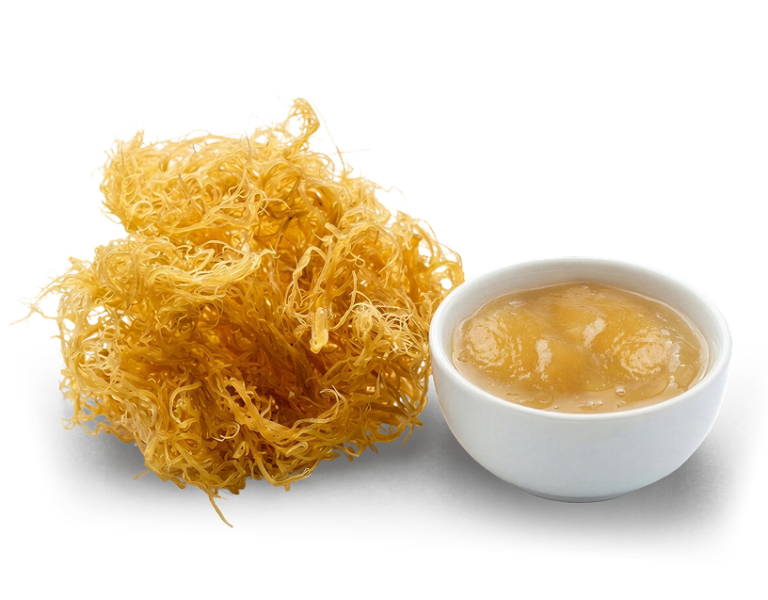
Sea moss is a red seaweed that grows on rocky coastlines in the Atlantic and the Caribbean. The Irish variety is Chondrus crispus; Caribbean sea moss is often a related species. Our sea moss is wildcrafted, which means it is gathered from the ocean rather than grown in pools. Read more about why we choose wildcrafted sea moss.
What Is Actually in Sea Moss?
| Nutrient | Why it matters |
|---|---|
| Iodine | Supports normal thyroid function.* Amounts vary from harvest to harvest. |
| Potassium | Supports normal muscle and nerve function.* |
| Magnesium | Involved in hundreds of processes, including energy production.* |
| Calcium | Supports bone health as part of a balanced diet.* |
| Soluble fiber (carrageenan) | Gives sea moss gel its texture and supports healthy digestion.* |
What Has Research Explored?
Here is where we like to be straightforward. Most published research looks at red seaweeds and their compounds in the lab or in animal studies. Areas researchers have explored include:
- Gut health: seaweed fibers act as prebiotics in early studies, feeding beneficial gut bacteria.
- Antioxidants: red seaweeds contain compounds with antioxidant activity.
- Minerals: sea vegetables are one of the few natural food sources of iodine.
What this means for you: sea moss is a nutrient-dense food that fits well into a healthy routine. It is not a magic fix, and anyone who promises one is overselling it. You can dig deeper in our guides to sea moss and gut health and the iodine connection.
How People Use Sea Moss Every Day
- In smoothies: a spoonful of gel blends right in. Try our Tropical Sea Moss Gel.
- In tea or oatmeal: gel adds a light, silky texture.
- As capsules: no prep and no taste. See Wildcrafted Irish Sea Moss 670mg.
- Homemade gel: start with raw wildcrafted sea moss and our step-by-step guide.
How Much Should You Take?
Follow the serving size on your label. For gel that is usually a tablespoon or two a day; for capsules, the serving listed on the bottle. Because sea moss naturally contains iodine, more is not better. Consistency matters more than quantity.
FAQ
Is sea moss good for you?
Sea moss is a mineral-rich whole food that can be part of a balanced diet.* Like any food, it works best alongside good sleep, water and a varied diet.
Gel or capsules: which is better?
Both contain sea moss. Gel is great if you like adding it to food; capsules are easier on busy days. Read gel vs capsules vs gummies.
Who should talk to a doctor first?
If you are pregnant or nursing, under 18, have a thyroid or other medical condition, or take medication, talk with your healthcare provider before use.
Keep reading